
Original hymns for our "Tell Me Something Good" Lent series
For our Tell Me Something Good Lent series, Rev. Anna Strickland has written five original hymns. Each hymn corresponds to the scriptures and sub-themes used in the series for the first five Sundays in Lent. Below are details about each hymn in the collection, a sample verse from the hymn, and the author’s reflection. If you purchased the full Tell Me Something Good Lent bundle, you can find the sheet music and bulletin inserts for these hymns on the patron access page. If you did not purchase the bundle, you can license each hymn individually using the buttons below.

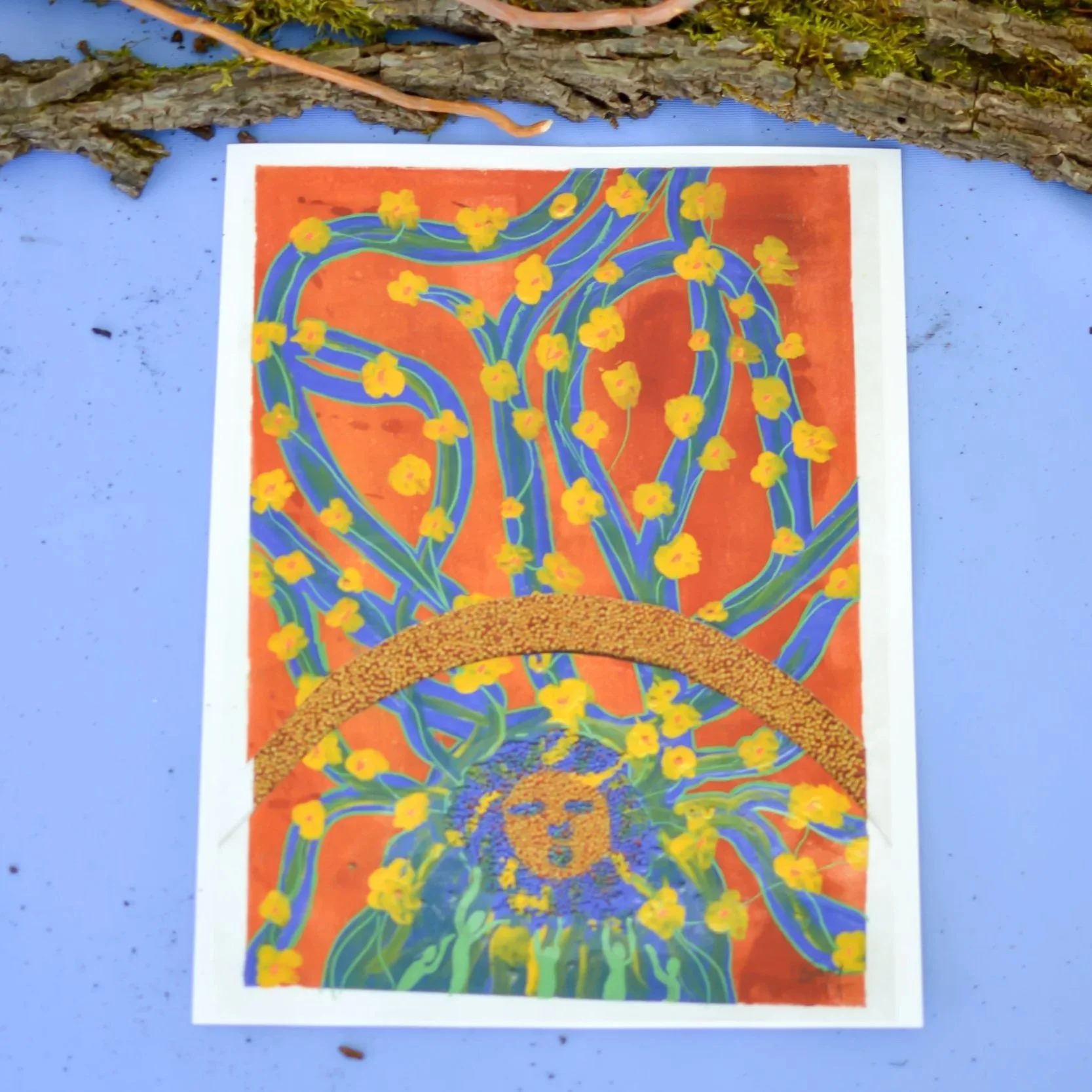
“We Are Small, We Are Numerous, We Are Deep” by Carmelle Beaugelin Caldwell
First Sunday in Lent: “In a Neat and Tidy Garden”
Tune: ALL THE WAY 8.7.8.7 D (“All the Way My Savior Leads Me”) by Robert Lowry (1875)
Words: Anna Strickland (2025), inspired by Matthew 13:31-32
In a neat and tidy garden grows a secret tiny seed
There among the planted barley will emerge a shocking weed
Growing quickly through the soil to break forth in vacant spot
What a joy when I discover God has planted in my plot!
What a joy when I discover God has planted in my plot!
When my husband walked into my office and read the title of this hymn over my shoulder, he noted, “You must not be talking about our garden!” But truthfully, I was. I have what can graciously be described as a “hands-off” approach to gardening. Every tenacious native plant that plants itself and comes back after scorching summers and deep freezes in the unpredictable Austin climate is a gift—even if others call it a weed.
The parable of the mustard seed is surprising, since mustard can be considered a weed. It grows fast, spreads far, and can be hard to contain. The kingdom of God is like that. We can fight it, trying to keep control of our little plot. Or, we can recognize that we are not in control after all and celebrate the gifts God’s kingdom brings.

Close-up of “LL Cool J” by Nicolette Faison
Second Sunday in Lent: “I Come With My Devotion”
Tune: ANGEL’S STORY 7.6.7.6 D (“O Jesus I Have Promised”) by Arthur H. Mann (1881)
Words: Anna Strickland (2025), inspired by Luke 7:36-50, Matthew 25:35-40
God made us in God’s image each person whom we meet
Extravagantly loving all of humanity
So I’ll return the love which has formed me from the start
Loving my creator, myself, and every heart
I’ve had the joy of officiating several weddings, and one of the things I include in each one is a reminder that we are formed from love. If God is love, and we are made in the image of God, then we are made in the image of love. We are part of the same Divine Love that broke forth in creation—and so is every other person we encounter.
That same Divine Love pours forth from the woman’s alabaster jar, drenching Jesus’ feet. In her act of devotion, she serves Jesus’ humanity and worships his divinity. Following her example, can we allow the love that has poured into us to overflow, loving not only God but our neighbor who bears God’s face?
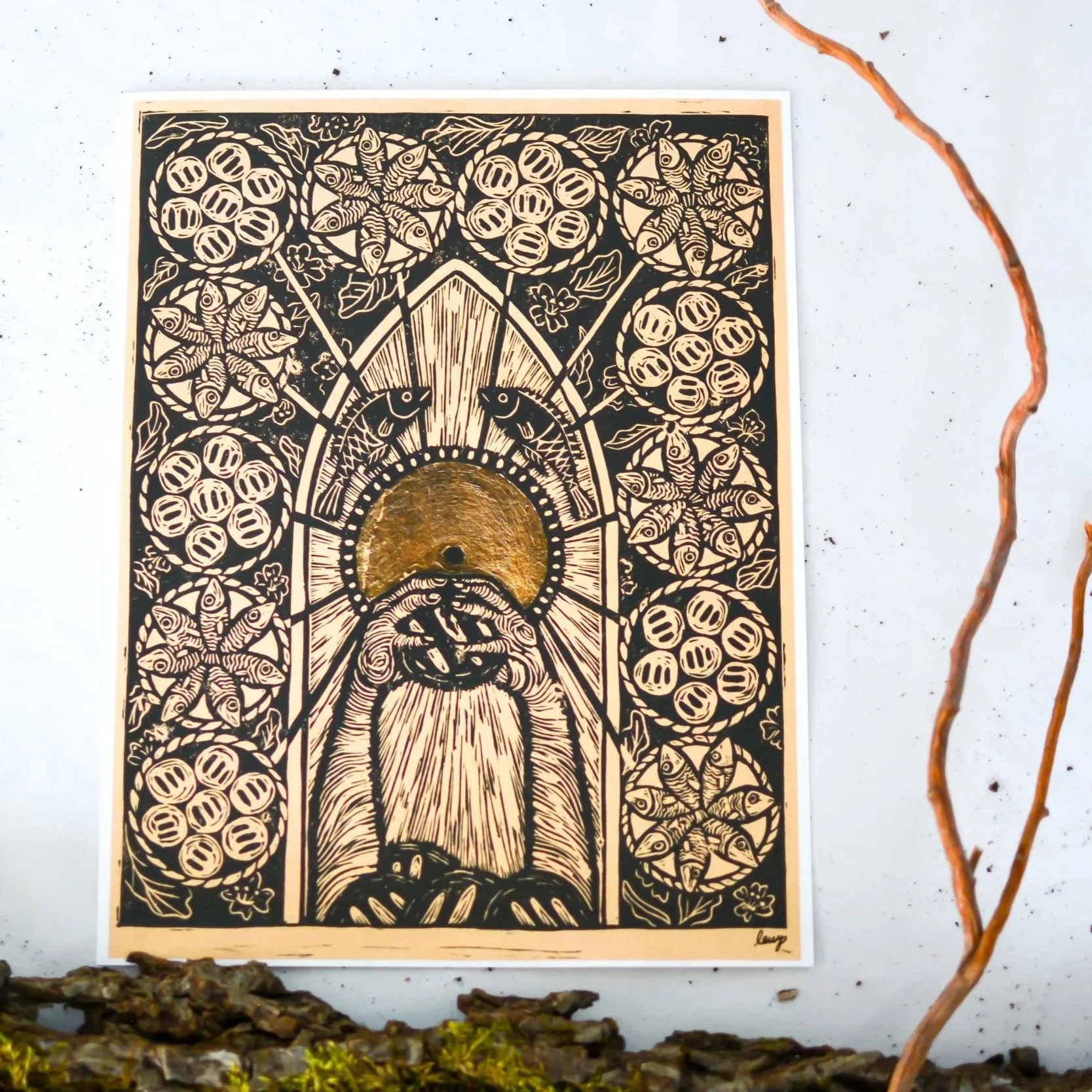
“Far More Abundantly” by Lauren Wright Pittman
Third Sunday in Lent: “Human Minds Just Can’t Imagine”
Tune: AUSTRIAN HYMN 8.7.8.7 D (“God Whose Giving Knows No Ending”) by Joseph Haydn (1797)
Words: Anna Strickland (2025), inspired by Ephesians 3:20-21
Human minds just can’t imagine all that God can bring to bear
Through our small and separate beings, even when we join to share
Still we follow where Christ leads us, many pieces of one whole
That we might allow our dreaming to transform our broken world
When we were looking for a supporting text for the feeding of the 5,000, my mind immediately went to Ephesians 3:20-21. It’s not a particularly well known verse, but it’s one my pastor used many years ago to encourage us. We’re a small congregation with a big heart for justice. Sitting in an urban area, just blocks away from our state capitol, there is so much work to be done. It can be disheartening.
But the author of Ephesians reminds us that God “by the power at work within us is able to accomplish abundantly far more than all we can ask or imagine.” Abundantly far more. More than we can ask, more than we can even imagine. So let us keep dreaming, for no dream is too big for God.

Close-up of “Let the Little Children Come” by Carmelle Beaugelin-Caldwell
Fourth Sunday in Lent: “See the Precious Children”
Tune: BEACH SPRING 8.7.8.7 D (“As We Gather at Your Table”) by B. F. White (1844)
Words: Anna Strickland (2025), inspired by Matthew 19:13-15, Deuteronomy 24:17-22
See the precious foreign strangers as they carry all they own
To a land that’s full of dangers for the powerless and prone
They are precious in the sight of God who made their homeland, too
In their journey they’re held by love as each day they start anew
We love the image of Jesus welcoming the children—their cute little faces, their stubby little legs just learning to walk. It’s easy to forget the underlying message beneath the saccharine glaze we’ve painted over the centuries. Jesus told the disciples over and over that the kingdom of God belongs to the last and least. The weak. The powerless. The ones who are overlooked.
Each verse of this hymn draws us deeper into compassion for the people Jesus loved, inviting us to see each group of people through the same lens we see the precious children: widows, immigrants, the unhoused, even the earth crying out for relief. What verses would you add? Who else is overlooked?
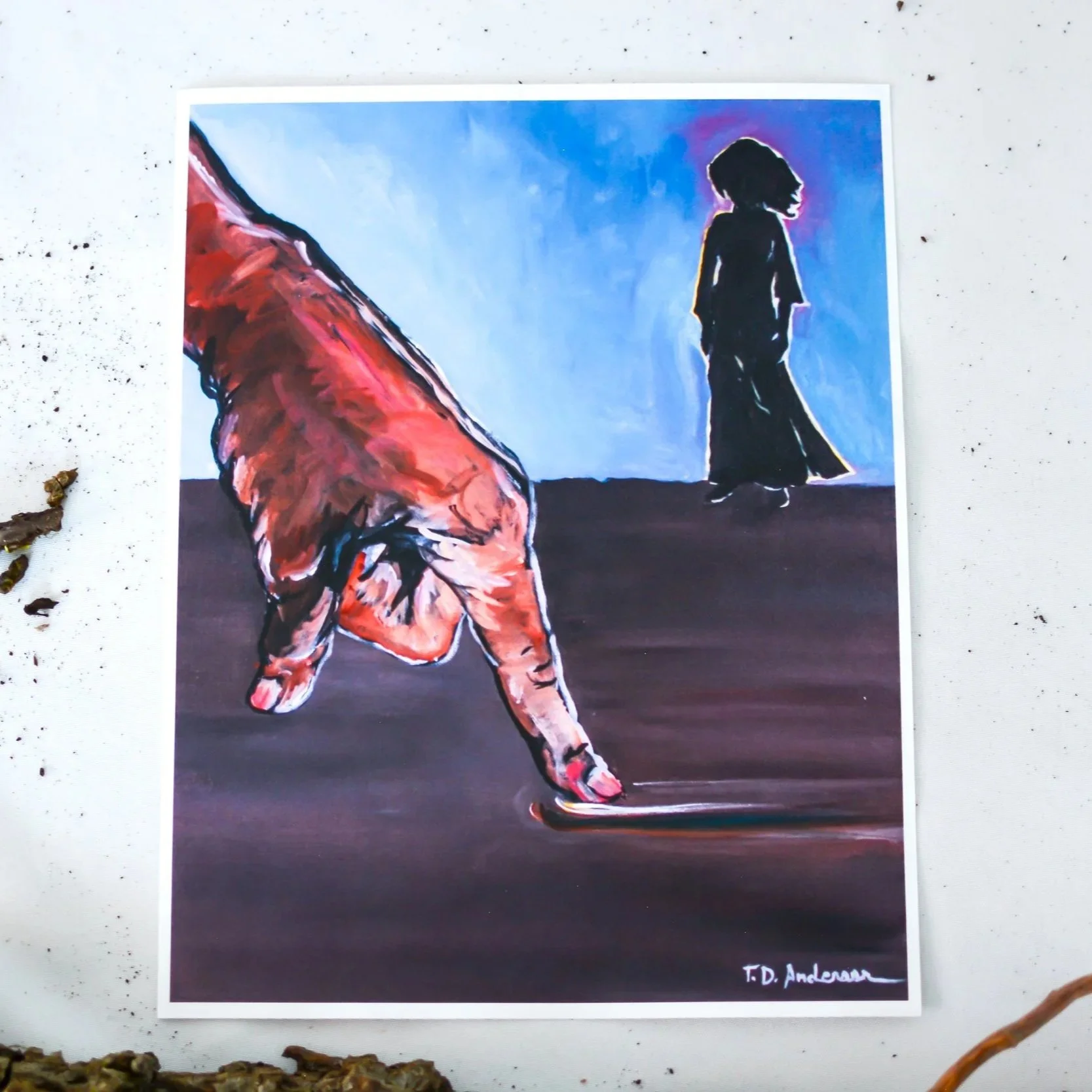
“Epilogue” by T. Denise Anderson
Fifth Sunday in Lent: “Let Us Remember”
Tune: ADELAIDE 5.4.5.4 D (“Have Thine Own Way”) by George C. Stebbins (1907)
Words: Anna Strickland (2025), inspired by John 8:2-11, Matthew 23:23, Micah 6:8
What does the Lord require of us?
To remain humble, loving, and just
Keeping the heart of the gospel in mind
Let us remember: do what is right
My mother has frequently said to me, “I’d rather err on the side of love.” It’s her political stance, her theological stance, her entire posture toward the world. And I think that’s really very Christ-like. Jesus didn’t discard the law. In fact, he said he came to fulfill the law. But when it came down to following the letter of the law or showing mercy, he showed mercy. He healed on the Sabbath, touched the unclean, and prevented a woman from being stoned to death for her crime.
Jesus’ criticism of the Pharisees in Matthew 23:23 reminded me of Micah 6:8, a core text for my church alongside many others. What matters? Justice. Mercy. Faithfulness. Humility. May we remember this in all of our actions.

Rev. Anna Strickland
Creative Partner & Operations Support for A Sanctified Art
Anna Strickland (she/her) looks for the Divine in the everyday like treasure in clay jars and first encountered God in the integration of her spiritual self and artistic self. She is a former teacher and college minister, a proud Texas Longhorn and graduate of Iliff School of Theology, a Baptist to the core ministering in ecumenical spaces, and a lover of chaos anchored by the belief that the Spirit is most active in the spaces between us.